
Becoming a Certified Body Trust® Provider (and what changed for me)
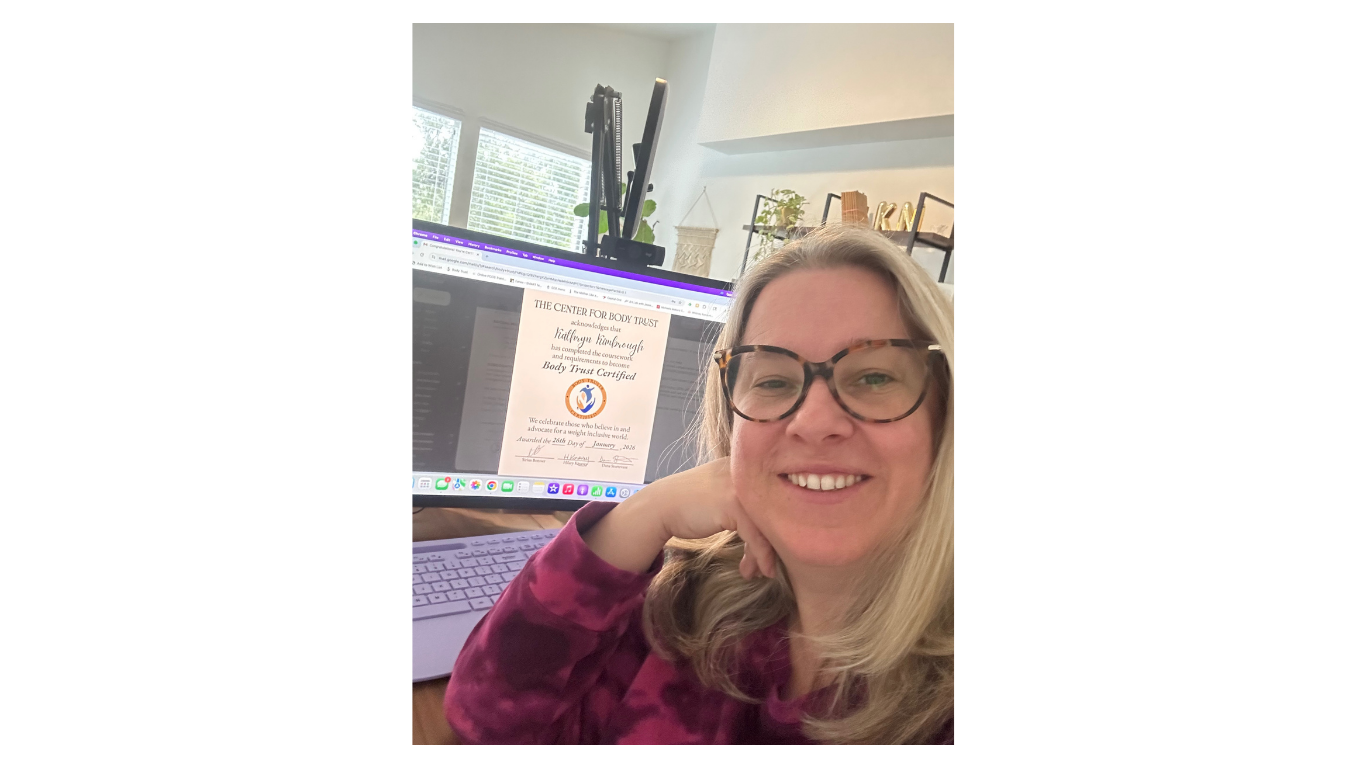
me with my body trust provider certificate!
In my work with clients, we often come back to the same question:
How did we get here?
How did we come to believe what we believe about our bodies? About food? About ourselves?
That kind of reflection can feel overwhelming. It’s layered, sometimes painful, and often uncertain. But it’s also where understanding begins. Not an end point—but a place to start seeing ourselves more clearly.
Body Trust is rooted in that kind of work. In our individual stories, and in the larger story we’re all part of. The way we’ve been taught to see bodies isn’t random—it’s shaped by culture, systems, and experiences that disconnect us from ourselves. And that’s why this work matters so deeply. We don’t leave people behind in it.
A moment that shifted something
In 2010, I was 30 years old and took a trip from Texas to visit a friend in Portland. Part of that trip included a stay at Breitenbush, a clothing-optional retreat center.
When I found out, my anxiety about my body went into overdrive.
How could I possibly be seen like that? In my body. This body.
There were negotiations—what I would wear, what others would wear, who was brave enough to be fully naked. I had never been anywhere like that before.
And then the day came. I arrived.
There were all kinds of bodies. Pale, tan, wrinkled, toned, thin, fat, hairy, hairless, tattooed, marked, old, young.
And something unexpected happened:
My body didn’t matter.
Not in the way I had been taught it did. It wasn’t being evaluated. It wasn’t the most important thing about me. It simply existed—helping me have the experience I was there to have.
I felt free.
Finding this work
In 2014, I began working in private practice with a group of dietitians who specialized in eating disorders.
I didn’t know anything about eating disorders at the time—I had been working with older adults in nursing homes. But I was curious, and I quickly realized this was work where I could actually make a difference.
I also realized I had a lot of my own healing to do.
I started therapy. I read intuitive eating and self-acceptance books. I listened to podcasts about diet culture and perfectionism.
That’s when I found the work of Hilary and Dana.
Coming full circle
In 2016, they hosted an Embodied Practitioner retreat—at Breitenbush.
It felt full circle.
I went alone, which was its own challenge. I don’t usually do alone. I was nervous about traveling, about being in the mountains, about being in that space again.
And I did it anyway.
During that retreat, I created a timeline of my life—mapping moments connected to my relationship with my body, my anxiety, and my emotions.
Green for what was out of my control.
Pink hearts for moments of healing.
Most of the pink hearts came later. They were tied to moments where I had choice—where I was actively choosing to relate to myself differently.
That experience has stayed with me. I still talk about it with clients.
Because that’s what this work is: intentional, ongoing, imperfect.
Life keeps adding to the story
In the years that followed, my life continued to shift.
I became a parent. I learned what it means to let go of control in new ways. My body taught me things about boundaries, advocacy, and acceptance that I couldn’t have learned any other way.
I opened my own private practice because I needed my work to fully align with an anti-diet approach.
During the pandemic, I found my way back to art. Watercolor became another teacher—about control, letting go, and expression. That eventually grew into art journaling workshops, where I now help others explore their own stories in creative, embodied ways.
The work continues
I began the Body Trust certification process in 2022.
At the same time, I was parenting two children, supporting aging family members, running a business, and navigating the realities of an ever-changing world.
This wasn’t a neat, linear process.
It asked me to revisit my own story again—to look at what had shifted, what felt more settled, and what was still tender.
I added more years to my timeline. More pink hearts. A few more green boxes.
My story keeps evolving. The work is ongoing.
And that’s not a problem to solve—it’s part of being human.
What this means to me
Becoming a Certified Body Trust® Provider isn’t about arriving somewhere.
It’s about deepening a way of seeing.
I used to believe that your body said something about who you are as a person. And it does. But it doesn’t say anything about your worthiness.
That shift didn’t happen all at once. It came through years of reflection, unlearning, and practice—through my own story and alongside the stories of my clients.
Every conversation I have with a client is part of something larger. This work is individual, but it’s also collective. The way we relate to our bodies impacts how we move through the world—and how we show up for each other.
I’ve experienced a profound amount of healing through this work.
And I know it matters.
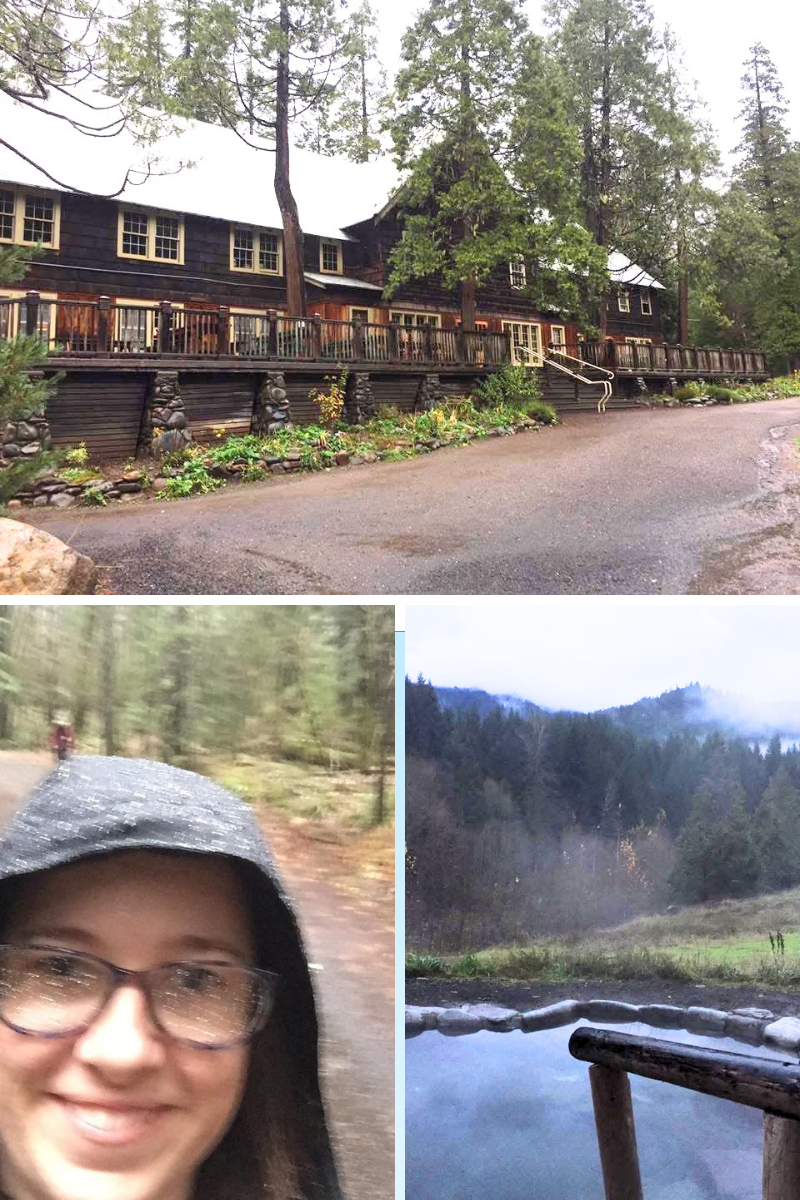
three of the four photos I took back in 2016 at Breitenbush while on the retreat with Hilary and Dana. The lodge and dining hall, the silent pool and a blurry selfie in the tall trees.